
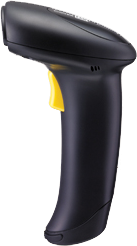
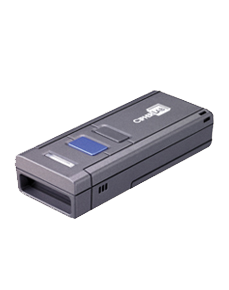
CCD SCANNERS
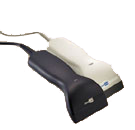
CCD Scanners have no moving parts. Lasers have oscillating mirrors that are subject to wear and mechanical failure.
CCD Scanners use LEDs for illumination. LEDs have about ten times the life of laser diodes.
LASER SCANNERS
Laser scanners use a laser beam as the light source and typically employ either a reciprocating mirror or a rotating prism to scan the laser beam back and forth across the bar code. A photodiode is used to measure the intensity of the light reflected back from the bar code.
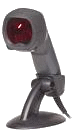
LINEAR IMAGE SCANNERS
The newest type of bar code reader currently available are linear image barcode readers that use a small video camera to capture an image of a bar code. The reader then uses sophisticated digital image processing techniques to decode the bar code.
BLUETOOTH SCANNERS
One of the main advantages of Bluetooth technology is the fact that it is very standardized which guarantees a high level of interoperability.Two Bluetooth devices communicating together with the same "profile" will understand each other without prior configuration, even if the devices are of different makes.
OMNI-DIRECTIONAL SCANNERS
These devices are continuously emitting multi-directional light beams to maximize the reading of a bar code regardless of the orientation of the bar code to the scanner to free the user to present the bar code in any orientation.
2D SCANNERS
There is a large variety of 2D symbologies. The most common are matrix codes, which feature square or dot-shaped modules arranged on a grid pattern. 2D symbologies also come in a variety of other visual formats.
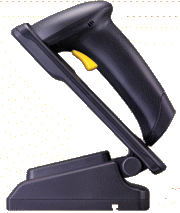

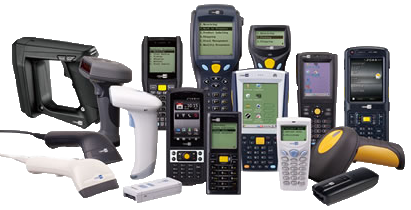
BARCODE SCANNERS


Web updated July 2015
-